During oil and gas production and operation, crude oil storage tanks accumulate a large amount of viscous sludge deposits at the bottom after long-term continuous operation. This sludge consists of a mixture of sludge, sediment, gum, and heavy components. The continuously accumulating sludge directly reduces the effective oil storage capacity of the tank, interfering with the accuracy of oil metering and affecting storage and transportation efficiency. Furthermore, the corrosive media in the sediment continuously erode the tank bottom and walls, accelerating corrosion damage and shortening the overall service life of the tank. Therefore, regular tank cleaning is an essential core maintenance task for oil and gas companies to ensure equipment integrity and stable production.
For a long time, domestic tank cleaning operations have mostly relied on traditional manual cleaning processes. These operations require significant investment of manpower and resources, involving lengthy steam purging, repeated water circulation cleaning, and multiple rounds of gas sampling, testing, and replacement. Storage tanks are typical enclosed spaces with poor ventilation, making them highly susceptible to the accumulation of hydrogen sulfide and flammable toxic gases. Even after multiple rounds of pretreatment and replacement, the gas environment inside the tank remains subject to dynamic changes, posing significant safety hazards such as poisoning, asphyxiation, and explosions. Workers wearing heavy full protective gear enter the tanks to manually shovel and wash away the oil sludge at the bottom. This process is not only labor-intensive and involves harsh working conditions, but also results in a long overall construction period, high costs for labor, auxiliary materials, and hazardous waste disposal of the oily sludge, and immense pressure on on-site safety monitoring and risk management.

This extended oil storage tank dredging and maintenance project faced extremely demanding on-site conditions. The manhole opening of the tank was only about 300mm in diameter, and the narrow entrance restricted equipment access. Most conventional large-scale dredging equipment on the market could not be deployed into the tank. The project ultimately selected the Xi'an Alpha 300 dredging robot to clean the sediment from the bottom of the tank. After disassembly, the equipment was deployed into the tank through the narrow manhole. Construction personnel remained stationed in a safe area outside the tank throughout the process, completing all operations using a visual remote control system. This truly achieved zero personnel entry into the tank, eliminating the safety risks of poisoning, suffocation, and explosions associated with working in confined spaces.
This is also the core reason why Xi'an Alpha insists on customizing equipment to adapt to various complex on-site conditions. Different storage tanks and gas field water tanks have significant differences in manhole opening size, internal structural layout, sludge viscosity and compaction degree, and medium composition. Standardized general-purpose equipment often faces practical problems such as inability to enter the site, obstructed passage, and poor dredging adaptability. Only by conducting customized research and development and configuration adjustments based on the actual working conditions at the project site can we ensure that the equipment can smoothly enter the working space, carry out dredging construction efficiently, and ensure that the project schedule is not affected by equipment compatibility issues.

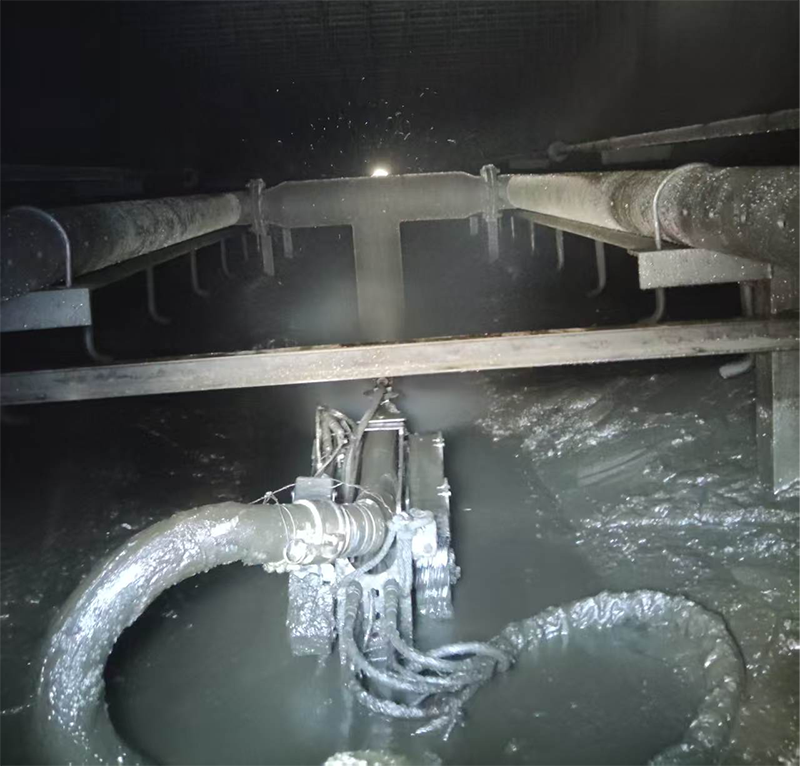
The Alpha 300 sludge removal robot, equipped with an anti-slip tracked chassis, can adapt to complex conditions such as muddy and slippery conditions and clumps of oily sludge inside tanks. It can move flexibly at the bottom of the tank and autonomously adjust its working posture and position. The front-end mixing mechanism breaks up the hardened oily sludge, and the wear-resistant suction unit continuously collects the oily sludge deposited at the bottom of the tank. Through a matching closed-loop pipeline, the oily sludge is directly transported to a designated collection container outside the tank, completing an integrated continuous operation of tank cleaning and closed-loop transportation. This intelligent construction solution significantly reduces pre-treatment procedures such as steam purging and prolonged tank ventilation, effectively shortening the overall project duration and reducing water and energy consumption. The fully closed-loop transportation of oily sludge prevents spillage and leakage, reducing the risk of on-site environmental pollution from the source and reducing the additional workload of hazardous waste disposal.
The stable and smooth operation at the construction site fully demonstrates the Alpha 300 sludge removal robot's strong adaptability to harsh conditions such as small-diameter manhole oil storage tanks. Compared to the traditional manual tank cleaning method, this intelligent robot tank cleaning solution has advantages in four dimensions: safety production assurance, construction efficiency, on-site environmental protection management, and overall project cost, providing a new and feasible implementation path for dredging small-diameter storage tanks.
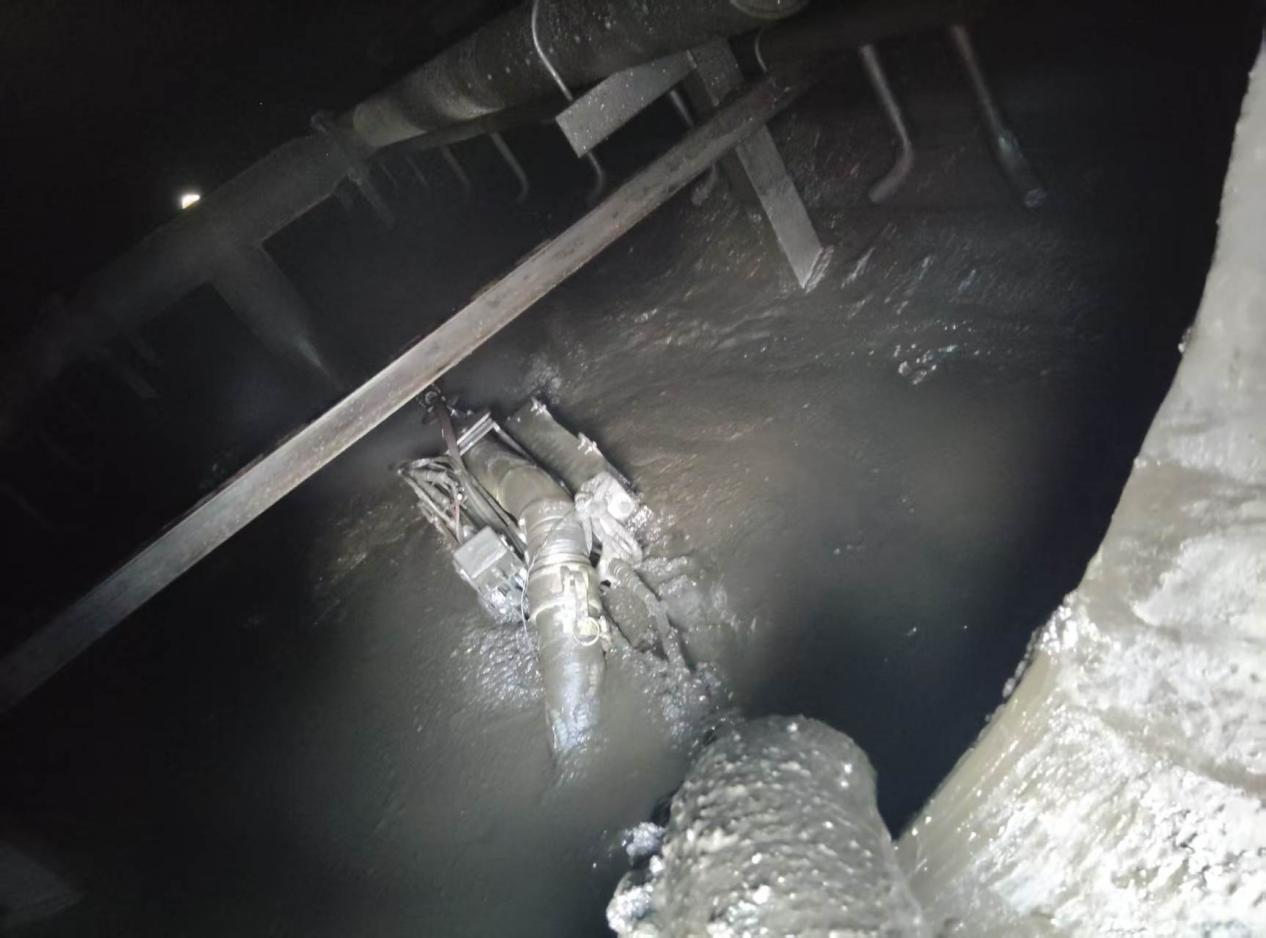
Xi'an Alpha has long been deeply involved in the field of intelligent equipment for confined spaces in the oil and gas industry, continuously iterating and optimizing the research, improvement, and field application of equipment for cleaning storage tanks, gas field water tanks, and sludge/oil and wastewater ponds. The company adheres to a service philosophy of customized solutions for each operating condition, replacing high-risk manual operations with domestically produced unmanned intelligent equipment. This helps major oil and gas companies implement safety production control requirements for special operations, and continuously provides safe, efficient, and green new solutions for the routine safe operation and maintenance of storage tanks in the petroleum and petrochemical industry.